Game Rules
Everything you need to start playing The Fathoming. Looking for a specific term? See the Glossary.
On this page
Introduction
Welcome to The Fathoming, a strategic fantasy card game where players command Warriors, manipulate Terrains, and use Assets to outwit their opponents. Build your deck, master your class, and compete to achieve victory in the mystical world of The Fathoming.
Two players each bring a 40-card deck. You summon Warriors, play Terrains and Assets, and attack to earn Loot. The first player to reach 10 Loot — or whose opponent runs out of cards — wins.
Card Types
- Warrior Cards — The primary combatants in your deck.
- Terrain Cards — Environmental cards with powerful effects, buffs, or debuffs.
- Asset Cards — Single-use cards with various tactical abilities. There are two subtypes:
- Actions — Let you take a specific action or provide a temporary effect.
- Items — Equipped to Warriors to grant that Warrior an additional effect.
The Playmat
Each player's side of the table is divided into zones, with a few shared spaces in the middle:
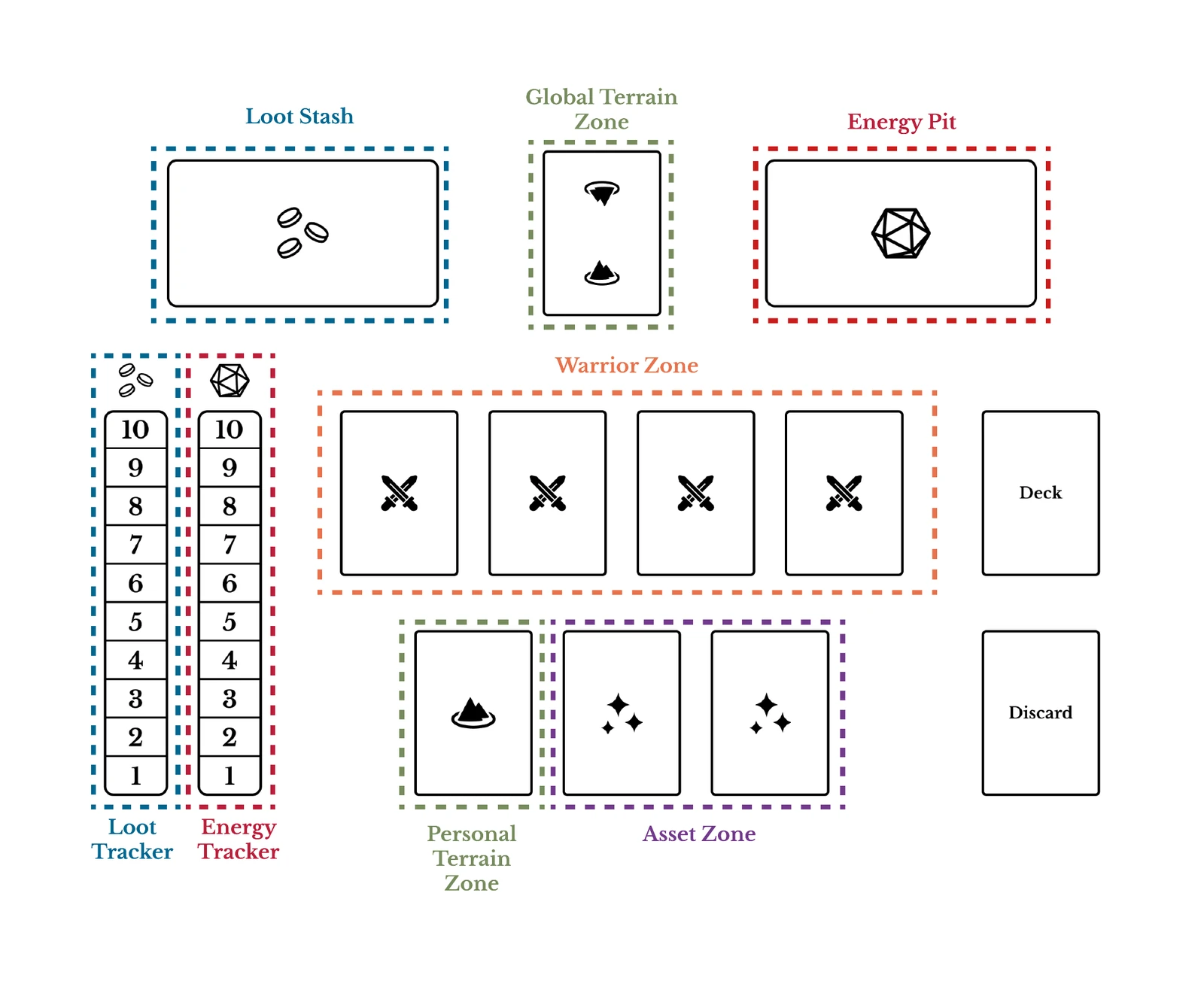
- Deck — The player's deck of cards.
- Discard — The pile where discarded and destroyed cards are placed.
- Warrior Zone — Up to 4 active Warriors can be played here.
- Personal Terrain Zone — 1 active Terrain per player.
- Asset Zone — Temporary zone for resolving the effects of Asset cards.
- Global Terrain Zone — 1 active Terrain, shared, playable by either player.
- Energy Tracker — Tracks the Energy Credits you have available to spend each turn.
- Loot Tracker — Tracks the amount of Loot you've taken.
- Dice or Coins — Used for certain abilities or effects. Dice can also track damage taken by Warriors and Terrains.
- Energy Pit — The shared repository of Energy Credits for both players to take from.
- Loot Stash — The shared repository of Loot tokens for both players to take from.
Card Classes
Warriors and Terrains belong to classes. There are 8 base classes, each with general strengths and weaknesses. Many card abilities rely on a card's class to trigger effects, buffs, and debuffs — keep classes in mind when building your deck.
| Symbol | Class | Color | Strengths | Weaknesses |
|---|---|---|---|---|
 |
Fairy | Pink | Healing / defense and low energy cost | Low health and terrain dependent |
 |
Pixie | Yellow | Status effects / debuffs and low energy cost | Low health and low attack |
 |
Vampire | Red | Health drain and loot manipulation | High energy cost and low attack |
 |
Werewolf | Orange | High health and high attack | High energy cost and reliant on chance |
 |
Mermaid | Blue | Powerful secondary effects and strong class synergy | Terrain-dependent and low cross-class synergy |
 |
Wiccan | Green | Powerful secondary effects and high health | Low attack and high energy cost |
 |
Human | Gray | Balanced attacks, health, and effects | No single outsized strength |
 |
Goblin | Brown | Effects upon death and high attack | Ability drawbacks and high energy cost |
The Divine Intervention expansion adds the Divine class — see the expansion section below.
Card Attributes
Every card shows its key attributes in the same spots. Here's how to read one:
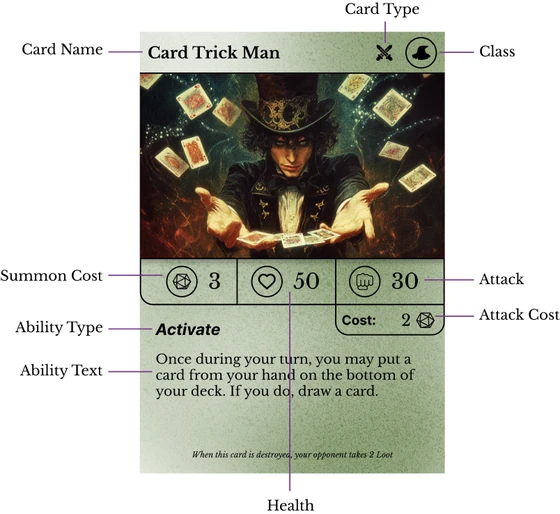
Warriors
Attributes:
- Class — The identifying group this card belongs to.
- Summon Cost — Energy needed to play this card from your hand to your field.
- Health — The amount of damage a Warrior can take before being destroyed.
- Attack — Damage dealt during combat.
- Attack Cost — Energy required to declare an attack.
Abilities: Constant (always active), When Played (triggers on summon), or Activate (requires player activation under specific conditions).
Terrains
Attributes: Class, Summon Cost, and Health (damage a Terrain can take before being destroyed).
Abilities: Constant (always active) or Activate (requires player activation under specific conditions).
Assets
- Actions — Play by paying their Summon Cost. Effects resolve immediately unless stated otherwise.
- Items — Play by paying their Summon Cost and equip to a Warrior on your side of the field. Items are discarded when the Warrior they're attached to is discarded or destroyed.
Game Setup
Deck Construction
- Each player builds a deck of exactly 40 cards.
- No more than 3 copies of the same card.
- A deck must include at least 1 Warrior card.
Starting Setup
- The game requires 2 players.
- Each player shuffles their deck and draws 5 cards for their starting hand.
- Flip a coin or roll a die to decide who goes first.
Turn Structure
Each turn consists of the following phases:
- Draw Phase — Draw 1 card from your deck.
- Energy Phase — Each player starts with 4 Energy Credits. For each consecutive turn, players gain their base amount +1 for each turn they've completed, up to a maximum of 10.
- Play Phase — Take the actions below in any order (see details).
- End Phase — Resolve any end-of-turn effects, then return any remaining Energy Credits to the Energy Pit.
The Play Phase
During your Play Phase you may, in any order:
- Summon Warriors to your Warrior Zone by paying their Summon Cost.
- Play Terrains:
- Personal Terrain — You may have 1 active Personal Terrain. To swap it, discard the current one and pay the new terrain's Summon Cost. Its effects only affect your side of the field.
- Global Terrain — Either player may play here, but only 1 can be active. If your opponent controls the Global Terrain, you must destroy it before playing your own. If you already control it, you may discard it and pay to play a new one. Its effects affect both sides of the field.
- Play Assets: take an Action's described effect, or equip Items to your Warriors (up to 1 item per Warrior unless an effect states otherwise).
- Use "Activate" abilities from your Warriors, your Personal Terrain, or the Global Terrain.
- Declare attacks with your Warriors — each Warrior may attack once per turn.
- Draw — You may pay 2 Energy to draw 1 card.
Combat
- Declare an attack. Choose one of your Warriors and pay its Attack Cost, then target an opponent's Warrior or Terrain.
- Resolve damage. Add the attack's damage (after all effects on both the attacker and target) to the target's total damage. If a card's total damage is ever greater than or equal to its Health, it is destroyed.
- Collect Loot. When you destroy a Warrior, collect Loot per the Loot Collection Guide. Destroying a Terrain grants no Loot.
Other Rules
- At the end of a player's turn, if they have no Warriors on their field, the opposing player collects 1 Loot. This applies from a player's second turn onward.
- A card's Attack Cost or Summon Cost may never be less than 0. If an effect would bring either below 0, it becomes 0.
- When applying terrain effects, first apply the Global Terrain's effects, then the Personal Terrain's effects.
- For any effect that involves searching your deck, you must show your opponent the cards you selected before putting them into your hand.
Loot Collection Guide
When a Warrior is destroyed, the opposing player collects Loot based on the destroyed Warrior's Summon Cost. The formula is (Summon Cost ÷ 2), rounded up:
| Summon Cost | Loot Collected |
|---|---|
| 1–2 | 1 Loot |
| 3–4 | 2 Loot |
| 5–6 | 3 Loot |
| 7–8 | 4 Loot |
| 9–10 | 5 Loot |
When a Terrain is destroyed, the opposing player collects no Loot.
Winning the Game
- Loot Victory — The first player to collect 10 Loot wins the game.
- Deck Out — If a player begins their turn with no cards left in their deck, their opponent wins the game.
Divine Intervention Expansion
The Divine Intervention expansion introduces rule changes, new mechanics, and new win conditions.
Rule Changes
- Both players now start the game with 4 Energy on their first turn.
- Decks may now contain 3 copies of any type of card. (Previously, Asset and Terrain cards were limited to 2 copies of the same card per deck.)
New Mechanics
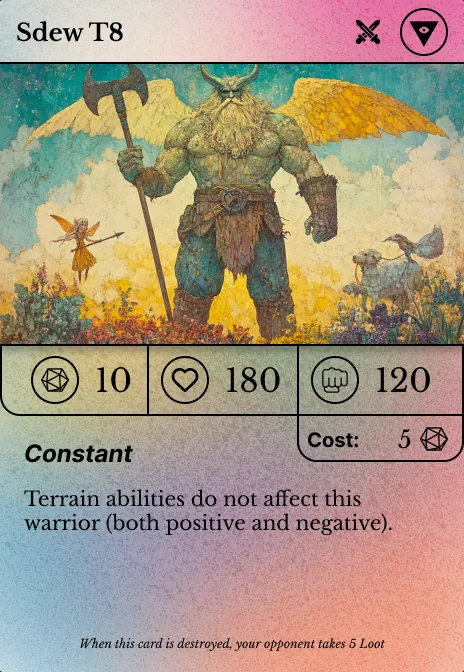
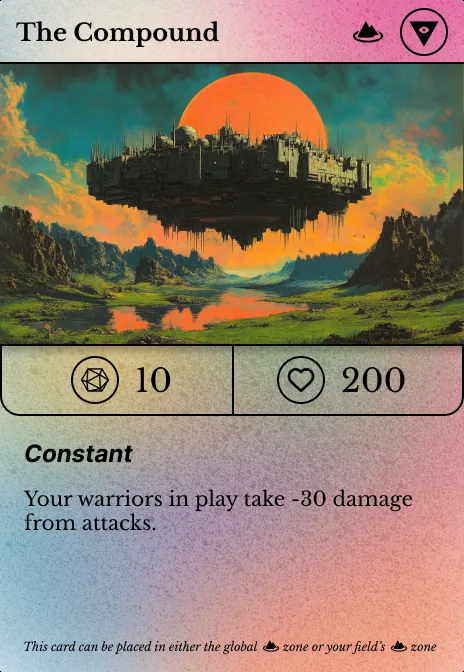
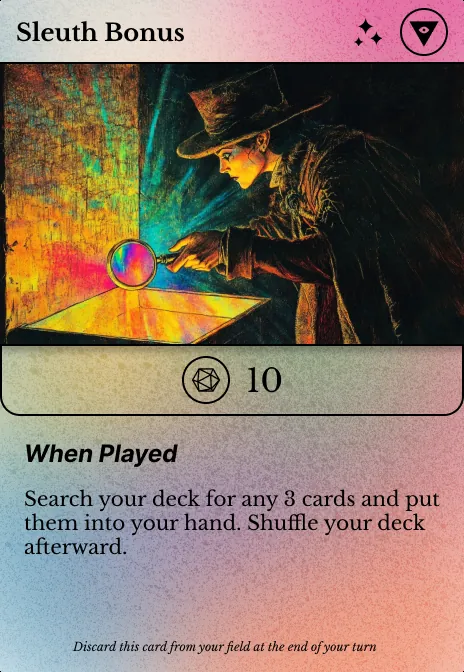
Divine cards are a new class of extremely powerful, energy-intensive cards.
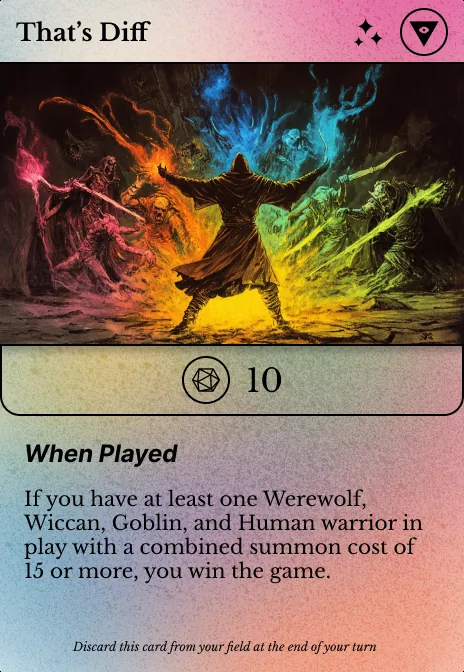
- Divine cards are identified by their rainbow background and the Divine symbol
 in the top-right corner.
 - Only 1 Divine card is allowed in your deck at a time.
- Divine cards come as Warriors, Terrains, and Assets.
- The Summon Cost for a Divine card is 10 − max(0, Opponent's Loot − Your Loot). For example, if you have 3 Loot and your opponent has 7, the card costs 6 Energy. If your opponent has the same or less Loot than you, it still costs 10.
Medallions are new Item cards that change the class of the equipped Warrior.
- If a Warrior has 2 or more Medallions equipped, it is considered to be all of those classes at once.
- Example: a Pixie Warrior with a Human Medallion and a Werewolf Medallion is considered both Human and Werewolf.
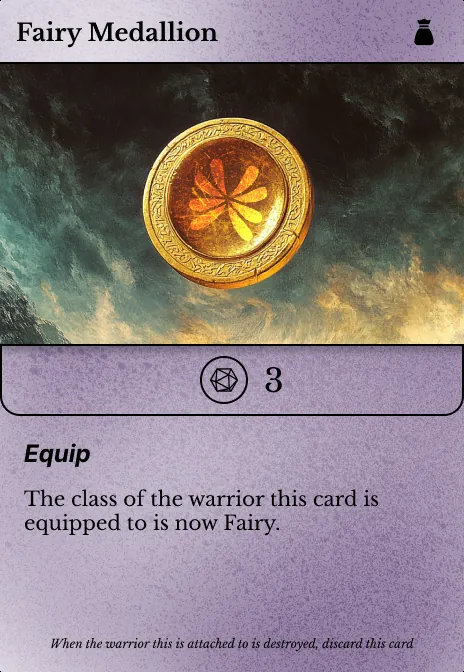
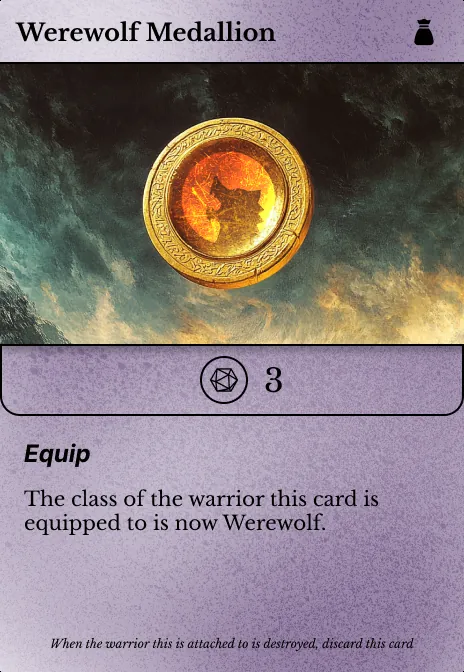
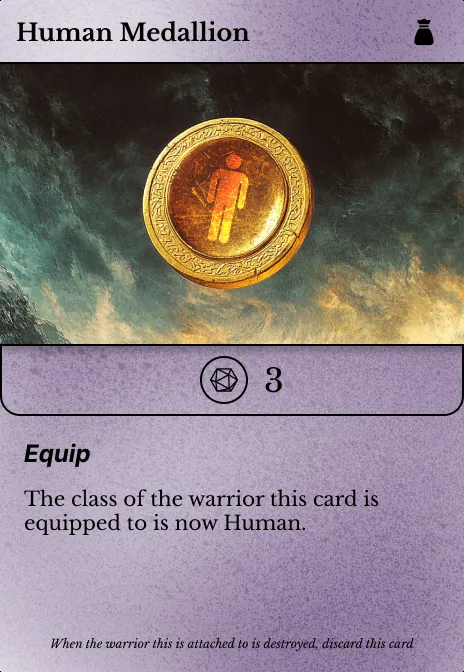
New win conditions — Some expansion cards introduce alternate win conditions: if certain criteria of Warriors on your field are met, you instantly win the game.
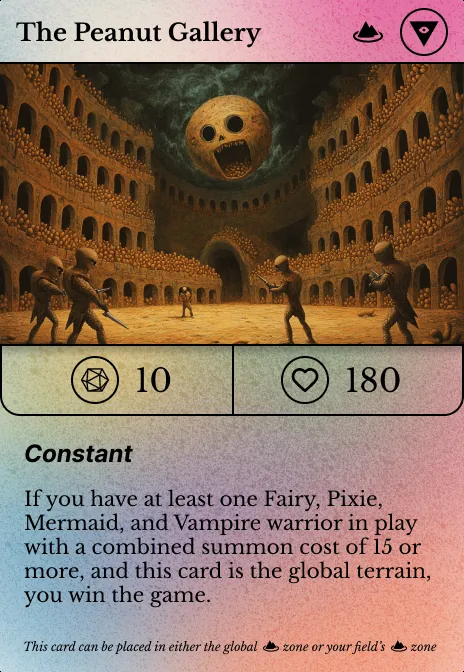
Clarifications
- All effects that involve searching the deck must end with the player shuffling their deck, unless explicitly stated otherwise.
- Effects that place Warriors or Terrains in play cannot result in a player having more Warriors or Terrains on their field than the rules allow.
- The application order of card effects, from weakest to strongest, is Global Terrain → Personal Terrain → Warrior Effects → Action Cards:
- Global Terrain — Applies to all Warriors in play.
- Personal Terrain — Applies to all Warriors on your field; overrules competing Global Terrain effects.
- Warrior Effects — Warrior abilities and their attached Items; overrule competing Terrain effects.
- Action Cards — Overrule all other competing effects from Terrains or Warriors.
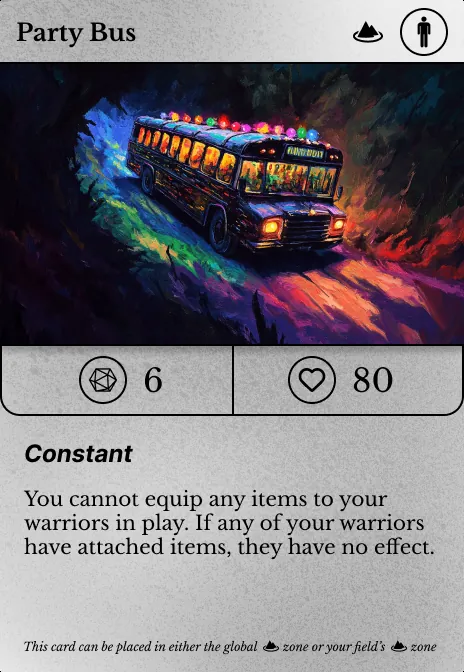
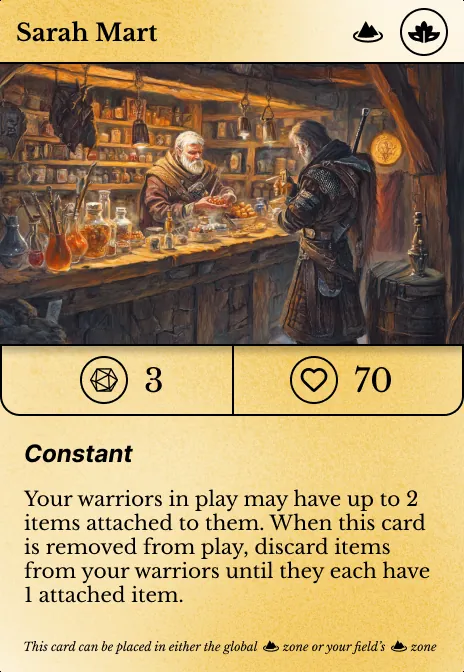
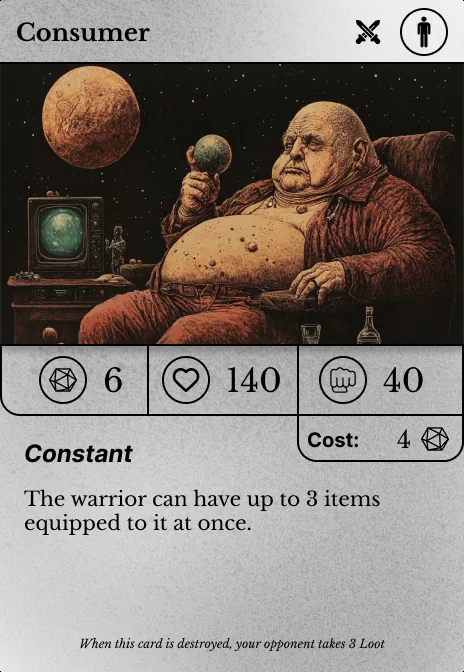
Example of effect priority: If Party Bus is the Global Terrain and Sarah Mart is your Personal Terrain: Party Bus prevents Items from being attached, while Sarah Mart allows up to 2 Items. Because they conflict, Sarah Mart (Personal) overrides Party Bus (Global), so you can attach up to 2 Items. However, Party Bus also states attached Items have no effect — Sarah Mart does not override that, so the Items remain inactive. If Consumer is on your field, its ability to hold up to 3 Items overrides Sarah Mart's 2-item limit, but only for Consumer.